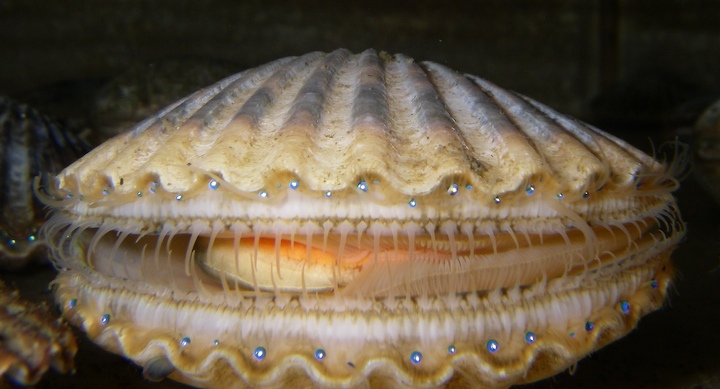
Volunteers will wade into St. Joseph Sound near the Dunedin Causeway on Aug. 1, counting bay scallops as part of Tampa Bay Watch's 31st annual Great Bay Scallop Search. The Dunedin site is one of four launch points across the Tampa Bay region for the citizen-science survey.
The search runs from 9 a.m. to 1 p.m. Registered participants meet at 9 a.m. for a captain's meeting with instructions before heading to assigned search zones. Each volunteer receives a free event T-shirt.
As of Wednesday, all volunteer spots were listed as full on the Tampa Bay Watch website. Residents interested in waitlist information can contact oyster shell program manager Richard Radigan at [email protected].
Radigan said in a news release that by collecting data used to monitor the bay's health, "participants play a critical role in the scientific process, all while having a great time on the water."
Tampa Bay Watch organizes the search in partnership with the Tampa Bay Estuary Program and Pinellas County Environmental Management.
Scallops vanished decades ago, now a health indicator
Bay scallops vanished from Tampa Bay in the early 1960s when pollution from dredging and industrial waste degraded the water, Serra Herndon, habitat restoration director at Tampa Bay Watch, said in the release. Water quality and seagrass coverage have since recovered enough to support the species again.
Scientists call the animals "underwater canaries" because they react quickly to changes in water quality, red tide, heavy rainfall and storms. A single adult bay scallop can filter more than 90 gallons of water per day. The creatures grow to about 2 inches, live only 12 to 18 months, and have rows of tiny blue eyes along the edge of their shells that detect movement from approaching predators.
The record haul came in 2009, when volunteers counted 674 scallops across all search sites. Data collected each year feeds into a Tampa Bay Estuary Program dashboard that tracks population trends over time.
Tampa Bay gained about 1,400 acres of seagrass in 2024, a roughly 5% increase and the first overall gain in nearly a decade, according to an April report from the Southwest Florida Water Management District. Old Tampa Bay, however, hit a record low for seagrass during the same survey period.
Four sites across Tampa Bay host the search
The four assembly points for the Aug. 1 search:
- Dunedin Causeway — 61 Causeway Blvd., Dunedin
- Fort De Soto Park boat ramp — 3500 Pinellas Bayway South, Tierra Verde
- Grandview Park boat ramp — 3734-3814 6th St. S., St. Petersburg
- Emerson Point Preserve — 5801 17th St. W., Palmetto
Details and registration updates are posted at tampabaywatch.org/scallop-search.





.jpg)