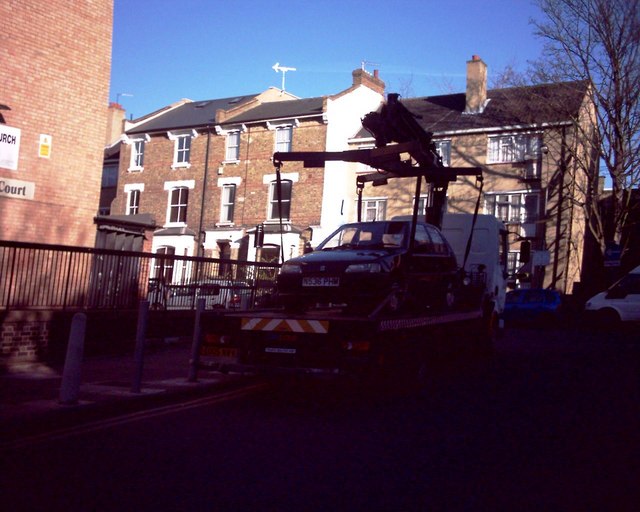
Drivers towed in unincorporated Pinellas County, including Palm Harbor and Dunedin, will soon face new fees for electric vehicles and a possible fuel surcharge. But the most complained-about charge in the county remains unregulated for now.
The Pinellas County Commission voted 4-3 Tuesday to pass a stripped-down towing ordinance after a heated debate in which commissioners pulled apart a broader staff proposal and rewrote it at the dais. The partial ordinance approves three items: a fuel surcharge of up to $1 per mile when gas exceeds $5.50 per gallon (well above current prices, making it a safeguard rather than an immediate cost), a new electric vehicle towing fee of $35 per 15 minutes on scene capped at $70, and a Consumer Price Index adjustment to base tow rates capped at 3% annually for five years.
Left out entirely: the controversial $250 lien release fee that a new Florida statute allows towing companies to charge on illegally parked vehicles. That fee has generated 318 consumer complaints to Pinellas County Consumer Protection since July 2024 and accounts for 83% of all towing complaints filed between January 2025 and May 2026. In the first five months of 2026, it represented 94% of complaints.
County Administrator Barry Burton told commissioners the fee creates situations where drivers end up paying more than $450 total after a tow.
"We get people all the time who come in and are furious, because they follow the tow truck there, and they get the tow fee . . . and then they get a $250 fee, so they are getting a $450 plus tow for a six-minute hold — and that's a consumer protection issue," Burton said at Tuesday's meeting.
Burton recommended waiting for a Hillsborough County Circuit Court case to be decided before acting on the full ordinance. That case involves a plaintiff who alleges a towing company charged the $250 fee immediately upon tow, before a county-mandated 48-hour waiting period elapsed.
Commissioner Kathleen Peters, who made the motion for the narrower vote, argued the commission had previously agreed to act only on the fuel surcharge and EV fee. She was frustrated that staff presented the entire package.
Peters argued that years of frozen base rates pushed towing companies toward fees like the $250 lien charge. Because towing is a regulated industry in Pinellas County, companies cannot raise rates without county approval. "If there are bad actors out there it's because we created them, because they couldn't raise their rates on their own," she said.
Commissioner Chris Scherer, who voted against the partial ordinance, showed commissioners photos of a towing yard with no visible address, no parking for vehicle owners, no accessible accommodations, no lighting, and no sidewalks. He proposed that any broader ordinance require towing companies to provide photos or video of illegally parked vehicles to the vehicle owner and compensate drivers when a vehicle is towed in error.
One gap in the partial ordinance: county legal staff advised that without the broader package, there is no regulation of late-night gate fees. Towing companies can charge any amount to open their lots after hours.
The remaining portions of the ordinance, including regulation of the $250 lien fee, after-hours gate fees, and potential minimum tow yard standards, will return to the commission at a date not yet announced. Until then, the lien fee remains unregulated and the complaints keep accumulating.



.jpg)