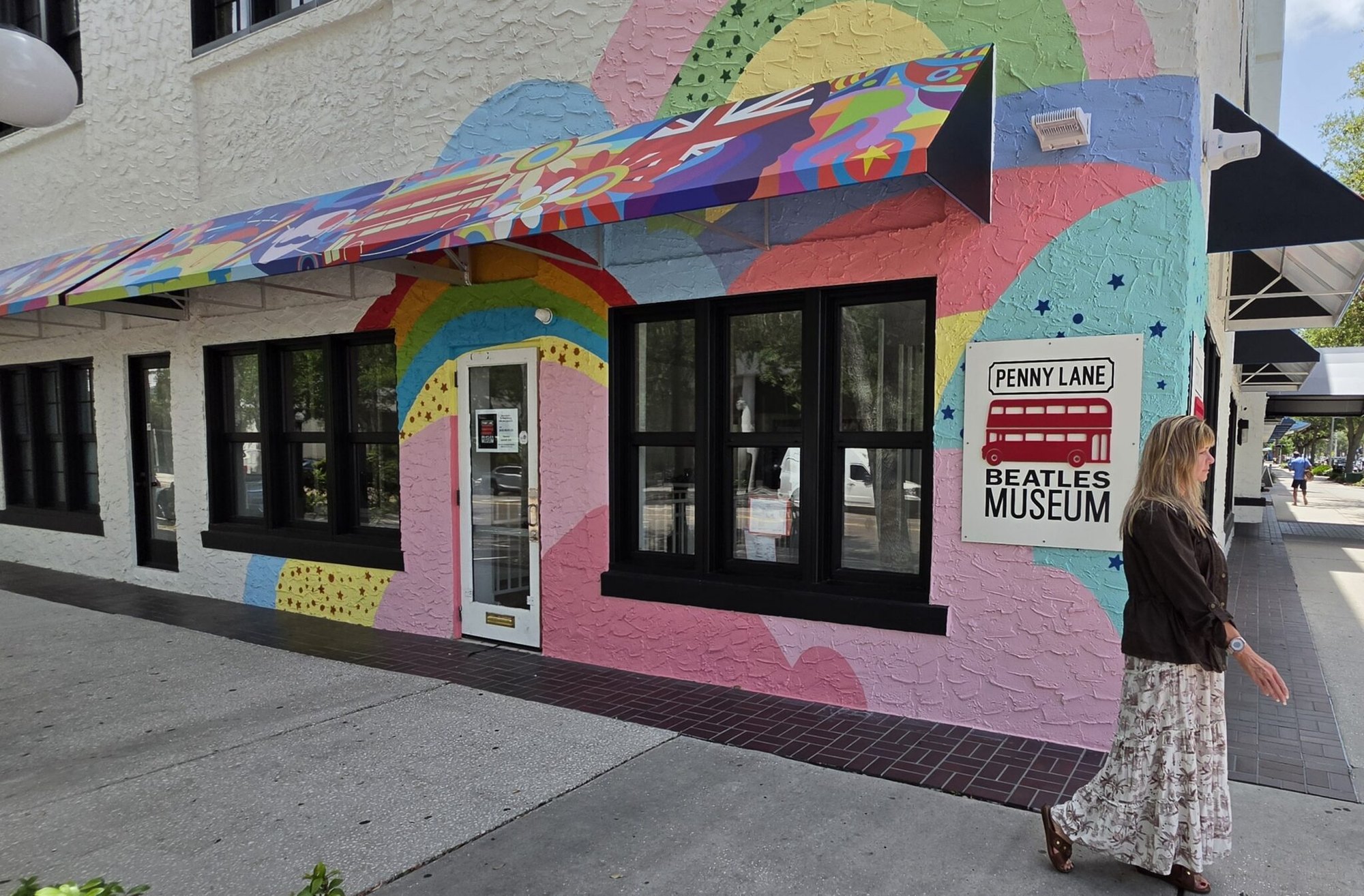
Downtown Dunedin's Beatles museum is taking the long and winding road to St. Petersburg.
After nine years in a 500-square-foot upstairs gallery, the Penny Lane Beatles Museum has closed its Dunedin location and will reopen in early August 2026 in a space four times larger at 146 Second St. N. in downtown St. Petersburg. The nonprofit museum drew nearly 10,000 visitors a year to its hard-to-find Dunedin location, according to museum figures cited by the St. Pete Catalyst in a report published Tuesday, July 15.
Dr. Robert Entel, a Clearwater-based radiologist who has collected Beatles memorabilia since the early 1970s, founded the museum and leased the Dunedin space to share his collection with fans. The collection includes stage costumes, musical instruments, signed photos, gold records, and vintage 1960s toys and dolls. Even with the new location expanding his display space to roughly 2,000 square feet, part of the collection will remain in storage.
"We have room to expand, we've pretty much decided," Entel told the St. Pete Catalyst. "There's a room connecting to it, which will double the capacity. What we wanted to do was expand the museum from where we were in Dunedin; and then once we get a foothold in St. Pete, expand even further."
New location brings expanded exhibits
The move brings professional-scale resources. The museum's board hired Craig Bachner as executive director and Allison Holuban as curator, and contracted with Creative Arts Unlimited of Pinellas Park to design the exhibit spaces. Creative Arts Unlimited previously designed exhibits for the Tampa Bay History Center. Displays at the new location will be organized chronologically and by subject, with a children's section planned.
The new museum is inside the Palais Royale, a 1926 building across from Green Light Cinema whose facade has been repainted ahead of the opening. Bachner said the building itself sets the tone.
"Before you ever enter the museum, and you see the outside of the building, you know that you're arriving somewhere special."
Collection began in London
Entel's collecting story traces back to his medical school days in London, when he found a card table on Portobello Road selling Beatles memorabilia. He bought an ashtray, a handkerchief and a record, stuffed them in his sock drawer and kept going. Flea markets and antique stores followed until every dresser drawer was full.
He described the museum as a "fan museum" rather than an academic institution, built for Beatles fans who want to enjoy the band's legacy. Even with the larger space, Entel said he is still collecting.

.jpg)