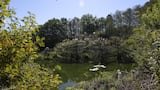
Decades of wetland destruction across Florida have cost homeowners $1.6 billion in flood damages, according to a study published Tuesday, July 14, in the American Economic Review. For residents of Palm Harbor and Dunedin, two communities that saw catastrophic flooding during the 2023 and 2024 hurricane seasons, the findings underscore a costly trade-off: developers pave over wetlands in flood-prone coastal areas, then replace them in cheaper, rural land miles away.
The study, co-authored by MIT economist Daniel Aronoff and UCLA economist Will Rafey, examined Florida's wetland mitigation banking program from 1995 to 2020. That program lets developers destroy wetlands in urban areas by purchasing credits for restoration elsewhere. The banks trading those credits have generated $2.4 billion in net surplus since 1996, the researchers found.
The problem, Aronoff said, is that the replacement wetlands end up far from the neighborhoods that need flood protection most.
"Wetlands reduce flood risk, and so when you're creating a wetland at one of these banks, you are reducing flood risk where they're being built, and you're creating flood risk in the urban area," Aronoff told the Tampa Bay Times.
Pinellas County sits squarely in the crosshairs. Surrounded by water on three sides, the county has one of the highest concentrations of properties in flood zones designated by the Federal Emergency Management Agency in the country, according to a Newsweek analysis of local floodplain data. Hurricane Idalia in August 2023 flooded more than 1,500 homes countywide, with the worst damage in coastal areas north of Dunedin, according to the county's federal disaster recovery action plan. That plan also notes that many Palm Harbor locations outside official flood zones flooded during the storms.
The federal government has since allocated $813.8 million in disaster recovery funds to Pinellas County for hurricanes Idalia, Helene and Milton. Hurricane Helene alone killed 12 people in the county when storm surge reached 8 feet.
A new state law has compounded the problem, according to John Hallman, director of the environmental group Defending Rural Florida. The law eliminated a longstanding requirement that developers replace destroyed wetlands within the same watershed. A Tampa Bay Times investigation found it led to the loss of more than 30 acres of wetlands in Hillsborough County since mid-2025, with replacement wetlands built more than 20 miles away.
"People are getting rich and not protecting our wetlands," Hallman said. "We're at a point where we can't give up any more wetlands."
As a fix, Aronoff proposes a tax on wetland credit transactions that would go directly to flood victims. He estimates it would have cut flood damages over the past 25 years from nearly $2 billion to $282 million while reducing developed wetland acreage by one-third. The tax would make development unprofitable only where destroying a wetland would cause substantial flood risk, he said.
No Pinellas County-specific dollar figure from the $1.6 billion statewide total was available in the study. Neither the Dunedin City Commission nor the Pinellas County Commission has scheduled discussion on the findings.



.jpg)