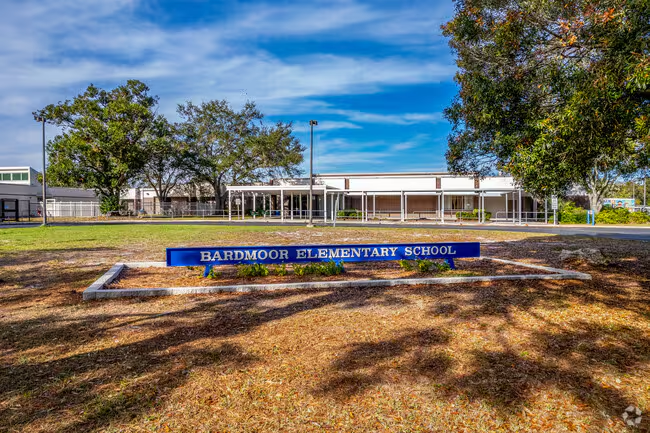
A mold infestation at Bardmoor Elementary School in Seminole has forced at least four classrooms to relocate, and teachers who reported breathing problems say Pinellas County Schools denied their workers' compensation claims.
The situation, first reported by Jeffrey S. Solochek of the Tampa Bay Times, affects classrooms that house prekindergarten students and an autism unit. Parents were not told why their children's classrooms moved until they received a letter days after the Oct. 22 relocations, according to the Times report. Some teachers said they were told not to explain the changes when parents asked.
Pinellas County Schools serves families throughout the county, including Palm Harbor and Dunedin.
Mold traced to mid-August
Concerns surfaced in mid-August when the art teacher notified the school's plant manager that her classroom had water leaks for several years. Heat and humidity had produced mold on her desk and furniture. She asked for an air quality test.
Art class moved to the school's science lab. Problems then appeared in classrooms housing the pre-K and autism programs.
Principal Quinn Williams relocated those classes by Oct. 22 and sent an urgent email that day to her area superintendent and the district's senior operations manager.
"Staff are increasingly concerned about their health and I am worried about the potential impact on both employees and students if the source of these concerns is not identified and addressed quickly," Williams wrote, according to the Times.
District says teachers must prove exposure
Teachers began filing workers' compensation claims for illnesses they said were related to the mold. Tracy McConnell, president of the Pinellas Classroom Teachers Association, encouraged them to submit the forms.
The district denied those claims. Angela Heet, a senior risk management technician for the district, told McConnell in an email that such claims require "clear and convincing evidence that the exposure alone came from the school," citing state law. District spokesperson Isabel Mascareñas said any evidence verifying the illness was caused solely by the school must come from independent medical sources.
Under Florida Statute 440.09, workers' compensation claims involving occupational disease or repetitive exposure require proof by clear and convincing evidence. The law defines "major contributing cause" as more than 50 percent responsible for the injury compared to all other causes combined.
Teachers said meeting that standard would cost thousands of dollars because they would need to test their homes, cars and other spaces they frequent, the Times reported.
McConnell visited the school and described mold growing on air vents, equipment and sinks, plus sealed-off areas where workers tried to kill it, according to the Times.
Testing and cleanup underway
The district hired an independent contractor to test 10 classrooms, according to Mascareñas. Two showed elevated levels of organic material tied to an apparent leak from a cabinet with a sink. Students in those two rooms were moved, along with students in two additional classrooms at their teachers' request.
A professional environmental cleaning company began disinfecting surfaces and removing airborne particles. Portable air filtration systems were also deployed, Mascareñas said.
School board members said at their meeting that they first learned about the workers' comp issues that day and were looking into them. They acknowledged hearing about the mold concerns earlier, including receiving emails from people at Bardmoor, the Times reported.
In a Tampa Bay Times report published Oct. 29, district spokesperson Isabel Mascareñas said the affected classrooms and those that initially tested negative were scheduled for retesting Nov. 2. She said students would return once the rooms were cleared.